"Know Yourself Find Your Direction"
What is INFP? (The Mediator)
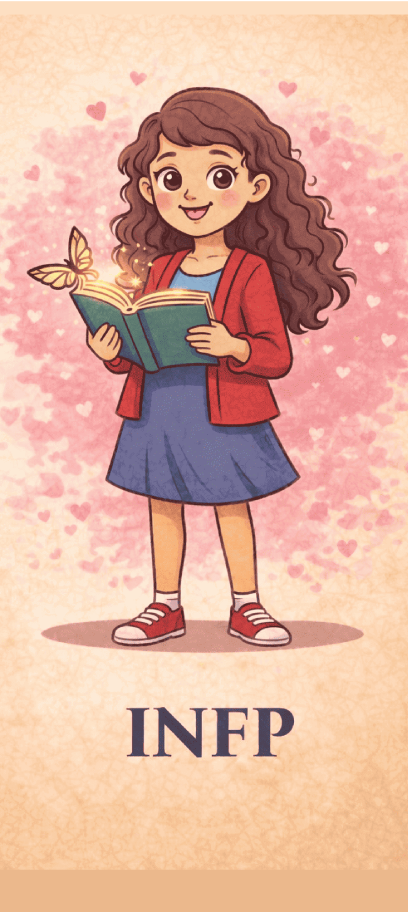
INFPs seek meaning, live by their heart, and constantly ask, “What is truly right and sincere here?” At their best, they are compassionate, creative, and inspiring. Under stress, they may withdraw, procrastinate, and idealize excessively.
Quick Guide
The world of an INFP is built on “meaning” and “sincerity.” If they do something, it must come from within. They have high goodwill and empathy; but if boundaries blur, they can burn out. They shine most when they are in nonjudgmental spaces and their values are respected.
Likes
Sincerity, deep conversations, creative production, freedom, value alignment.
Stressors
Harsh language, forced competition, meaningless work, pressure, emotional manipulation.
Golden Rule
Sincerity + boundaries: “Wanting” is as valuable as “not wanting.”
Strengths and Challenges
Strengths
- Value-focused: protects what is “right”
- Empathy: high sensitivity and compassion
- Creativity: producing symbols, stories, ideas
- Loyalty: deeply committed once bonds are formed
- Inspiration: carries hope and meaning to others
Challenges
- Idealization: expectations that challenge reality
- Procrastination: difficult when motivation isn’t internal
- Sensitivity: harsh tones can feel devaluing
- Withdrawal: distancing when hurt
- Boundary issues: burnout from difficulty saying “no”
How does an INFP appear?
Cognitive Functions
This framework helps to understand “how you perceive” and “how you make decisions.” Think of it not as a label but as a mirror: which ones dominate you, and which distort under stress?
Introverted Feeling (Fi)
Value compass. Activates the INFP’s “authenticity” radar. The question “Is this right for me?” lives here.
Extraverted Intuition (Ne)
Generates possibilities. Ideas, alternative paths, creative connections emerge here. INFP’s imagination and inspiration are nourished from this.
Introverted Sensing (Si)
Memory vault. Safe routines and familiar environments calm here. If overactivated under stress, fixation on the past may occur.
Extraverted Thinking (Te)
Planning and results muscle. As INFP strengthens this, ideas turn into “finished work.” Under stress, harsh self-criticism and need for control may arise.
INFP in Life Areas
💞 INFP in Relationships
INFP experiences relationships as a “safe inner world.” Love, intimacy, and value alignment nurture their growth. Even “a sharp word in a small moment” can resonate deeply inside.
What Works Well
- Nonjudgmental listening and compassion
- Sincere, honest communication
- Freedom and respect
Challenges
- Harsh language, mockery, belittling
- Manipulation and guilt-tripping
- Restriction and constant control
💼 Career and Work Life
INFP thrives in meaningful, creative, and people-centered work. Forced competition and “money-only” motivation can extinguish their spirit in the long run.
Suitable Fields
- Writing, editing, content creation
- Design, illustration, creative arts
- Psychology / counseling / coaching
- Education, guidance
- Social impact projects, NGOs
Role Behavior
- Employee: deep focus, creative problem solving, calm productivity
- Manager: a leader who cares for people and gives meaning
- Colleague: kind, supportive, mediator
🧯 Stress Management
Triggers
- Harsh communication and intense criticism
- Meaningless work, value conflict
- Excessive pressure and speed
- Conflict environments and competition
What Helps
- Solitude and silence
- Writing, drawing, creating
- Nature walks
- Small, safe routines
🌱 Personal Development
Growth for INFP is not about shutting down sensitivity; it’s supporting sensitivity with “structure and action.” Imagination + plan = inspiration grounded in reality.
Development Areas
- Setting boundaries: with clarity, not guilt
- Procrastination: 5-minute start
- Realism: breaking ideals into small steps
- Self-compassion: softening the inner voice
Recommended Activities
- Journaling and creative writing
- Art: drawing, music, photography
- Volunteering (with boundaries)
- Simple weekly plan (3 goals)
- Reading: literature, human stories
Frequently Asked Questions
Is INFP introverted?
Generally, yes. INFP recharges energy by being alone; crowds can tire them but they can form deep bonds with the right people.
Why is INFP known as the ‘dreamer’?
The INFP mind works with possibilities and meaning. Their rich inner world gives them a vivid imagination, often expressed symbolically.
Why might INFP seem sensitive?
INFPs are value-focused; harsh criticism or disrespectful tone can feel like “devaluation.” They feel best with kind and open communication.
What does INFP need in relationships?
Intimacy, trust, compassion, and freedom. For INFP, a relationship is “sharing a safe inner world.”
Are You Sure About Your Type?
See MBTI + Enneagram + Big5 results together.