"Know Yourself Find Your Direction"
What is ENFJ? (The Protagonist)
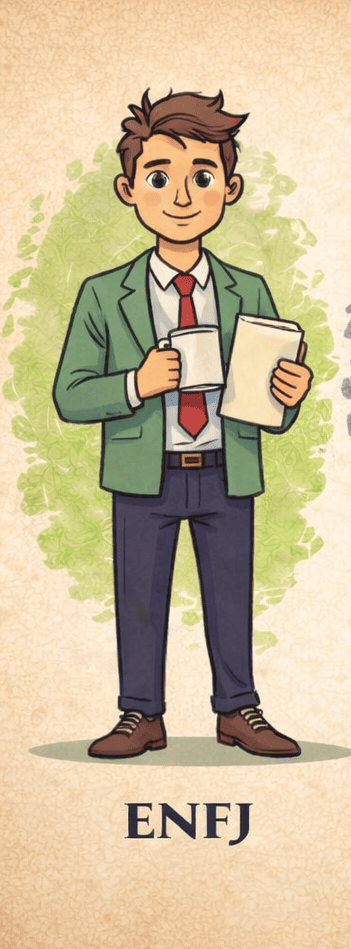
ENFJ is the type that brings people together, lifts motivation, and keeps alive the question, “What matters meaningfully to all of us?” At their best, they are inspiring leaders and strong connectors. Under stress, they may overburden themselves and tend to control.
Quick Guide
ENFJs’ “people radar” is usually on: they read the emotional atmosphere and quickly find common ground. When functioning well, they act as a bridge encouraging others. Overworking can trap them in the “carrying everyone” role which exhausts them.
Likes
Connecting, team spirit, growth, meaningful goals, appreciation, and warm communication.
Challenges
Cold communication, feeling unappreciated, toxic conflict, unclear intentions, disconnected teams.
Golden Rule
Boundary + compassion: “This matters to me” + “This is what I can do.”
Strengths and Challenges
Strengths
- Inspiration: gives people courage and a sense of direction
- Empathy and relationship management: quickly reads the needs of the environment
- Vision: clarifies the “where are we heading?” question
- Communication power: softens and smooths difficult conversations
- Responsibility: takes initiative and ownership for the team
Challenges
- “Rescuer mode”: trying to hold everyone together can cause burnout
- Need for approval: motivation may drop if appreciation is missing
- Tendency to control: over-directing when things fall apart
- Difficulty saying no: resentment can build when boundaries dissolve
- Emotional overload: risk of taking criticism personally
How does ENFJ appear?
Cognitive Functions
This framework helps understand “how you perceive” and “how you decide.” Think of it not as a label but a mirror: which function is dominant in you, which one is distorted by stress?
Extraverted Feeling (Fe)
Reads the emotional map of the environment and creates harmony. Notices people’s needs and generates energy for “let’s do it together.”
Introverted Intuition (Ni)
Finds meaning and direction. Reads people and events from the perspective of “where is this going?” ENFJ’s visionary side is nourished here.
Extraverted Sensing (Se)
Contact with “here and now.” As ENFJs develop this function, they become more spontaneous, lively, and relaxed. Under stress, excessive rushing and fleeing to overstimulation may occur.
Introverted Thinking (Ti)
Internal logical processing. When tired, ENFJs open up with the question “am I carrying everything alone?” If unbalanced, it may cause overanalyzing, harsh self-judgment, or “it should have been perfect” pressure.
ENFJ in Life Areas
💞 ENFJ in Relationships
ENFJs love to nurture the “we” feeling in relationships: they provide support, motivate, and keep communication lively. They thrive most on emotional reciprocity and appreciation.
What Works Well
- Open communication, regular emotional sharing
- Appreciation and small gestures
- Shared goals, shared rhythm (plans/rituals)
Challenges
- Emotional distance, indifference, “this is how I am” wall
- Passive-aggressive hints and vague expectations
- ENFJ constantly remaining in the giver role
💼 Career and Work Life
ENFJs shine in people-focused, communication-rich, meaningful work. They keep teams together, communicate the goal, and sustain motivation.
Suitable Fields
- Human resources, recruitment, L&D
- Coaching, consulting, psychological counseling
- Project/product management (people and communication intensive)
- Community management, customer success
- Training, speaking, internal communications
Role Behaviors
- Employee: quickly takes ownership with awareness of purpose and impact
- Manager: coaches, opens development opportunities, carries the vision
- Colleague: acts as a bridge, softens conflicts, builds team spirit
🧯 Stress Management
Triggers
- Constant conflict and tense environment
- Feeling unappreciated, lack of recognition
- The responsibility to “carry” everyone resting on the ENFJ
- Overloaded social schedule + not being able to rest
What Helps
- Clear boundaries: “I’m off at this time” rule
- Emotional venting with a trusted person
- Writing: naming thoughts and feelings
- Activating the body: walking, dancing, light exercise
🌱 Personal Development
Growth is not about dimming the ENFJ’s light; it’s about strengthening the fuse. Compassion + boundaries breathe life into both relationships and productivity.
Areas for Growth
- Setting boundaries: not confusing “no” with guilt
- Reducing control: giving people space
- Not personalizing criticism: reading it as data
- Own needs: asking “What do I need?”
Recommended Activities
- Mentoring / coaching (while keeping clear boundaries)
- Community events, volunteering
- Presenting, storytelling, preparing trainings
- Journaling: separating emotions and thoughts
- Body connection: walking, yoga, dancing
Frequently Asked Questions
Is ENFJ extroverted?
Usually yes. ENFJs draw energy from interacting with people; they quickly read the mood of the environment and enjoy connecting.
Does an ENFJ try to please everyone?
Yes, if balance is lost. Because ENFJs tend to prioritize harmony and others' needs, they may find it hard to say “no.” This tendency decreases as their boundary-setting skills develop.
Why might ENFJs seem controlling?
ENFJs value both the outcome and the process and want to help people reach their potential. If this desire turns into excessive guidance, it can be perceived as controlling.
What does an ENFJ need in relationships?
Emotional reciprocity, open communication, appreciation, loyalty, and a shared vision. ENFJs want to “grow together.”
Are you sure about your type?
See your MBTI + Enneagram + Big5 results together.