"Know Yourself Find Your Direction"
What is ESTP? (The Entrepreneur)
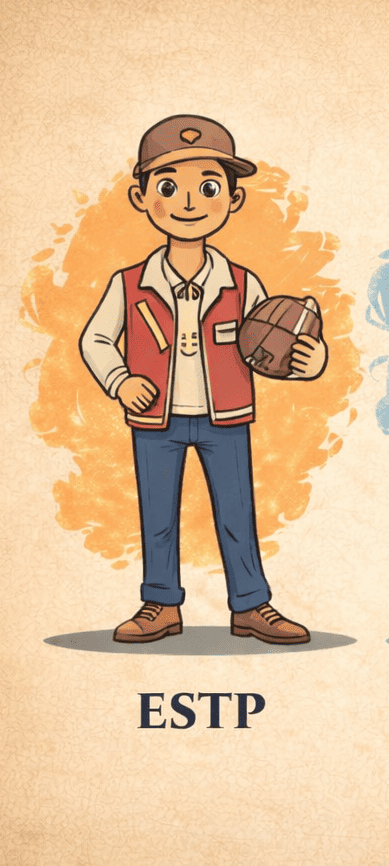
ESTP is the type that senses opportunities, takes action, and speeds up the environment by asking “what’s next now?” At their best, they are bold, practical, and solution-oriented. Under stress, they can seem impatient, overly impulsive, and prone to conflict.
Quick Guide
ESTP’s radar is on the field: real world, real problems, real opportunities. They think fast and act fast; in crises, they are the type who says “okay, we’ll handle it.” What bothers them most are unnecessary bureaucracy and excessive theory.
Likes
Movement, competition, practical problem-solving, quick results, social interaction.
Challenges
Slowness, long meetings, unclear rules, unnecessary procedures, oversensitivity.
Golden Rule
Speed + calculation: “Try first” but “try small.”
Strengths and Challenges
Strengths
- Calm under pressure: finds quick solutions
- Practical intelligence: focuses on “what works?”
- Courage: takes risks, steps into the field
- Persuasion and influence: can mobilize people
- Flexibility: adapts quickly to changing conditions
Challenges
- Impulsiveness: “immediate” mode can lead to mistakes
- Impatience: slow teams and processes frustrate
- Tendency to conflict: can become harsh if competitiveness rises
- Missing details: tracking becomes difficult when moving fast
- Delayed emotional language: may be perceived as “not caring”
How does ESTP seem?
Cognitive Functions
This framework helps understand "how you perceive" and "how you decide." Think of it as a mirror, not a label: which ones are dominant in you, which ones get distorted under stress?
Extraverted Sensing (Se)
Reads the field. This is ESTP's "immediate action" engine. Opportunity, risk, and reality are all vivid here.
Introverted Thinking (Ti)
Logical filter. It tests “Does this really work?” ESTP’s practical intelligence and fast analysis power come from here.
Extraverted Feeling (Fe)
Social influence muscle. When ESTP uses this, they quickly connect with people and manage the environment. If balance is lost, risks of “too much show” or “too harsh jokes” may arise.
Introverted Sensing (Si)
Memory and follow-up muscle. As ESTP develops this, routine and detail management strengthen. Under stress, they may get stuck on “past mistakes” or become overly cautious.
ESTP in Life Areas
💞 ESTP in Relationships
ESTP desires liveliness in relationships: moving together, laughing together, sharing experiences. Their love language is often “being present” and “sharing the moment.” Jealousy and restriction are major brakes in the relationship.
What Works Well
- Space and trust
- Direct, honest communication
- Shared activities and fun
Challenges
- Control, jealousy, restriction
- Passive-aggressive communication and hints
- Prolonged dramas and tests of fragility
💼 Career and Work Life
ESTP shines in fast decision-making, crisis management, and results-driven fieldwork. Clarity on “What did we solve today?” boosts their motivation.
Suitable Fields
- Sales, negotiation, business development
- Entrepreneurship, commerce
- Operations, field management
- Emergency/crisis roles (logistics, security, emergency health, etc.)
- Sports, coaching, performance-focused work
Role Behavior
- Employee: solves on the ground, produces practical results
- Manager: demands speed and results, leads in crises
- Colleague: direct, fun, competitive
🧯 Stress Management
Triggers
- Slow processes and bureaucracy
- Closed spaces, inactivity
- The feeling of “not being able to do anything”
- Prolonged emotional dramas
What Helps
- Movement: sports, walking, short runs
- Mini challenges: small goals
- Change of environment: going outside
- Clear action list: “I’m doing this now”
🌱 Personal Development
Development for ESTP is not about slowing down their speed; it’s about adding “follow-through and depth” to the speed. When speed + discipline combine, ESTP becomes a “finisher” rather than “someone who starts many things.”
Areas for Growth
- Impulse control: taking “a breath” pause
- Follow-up: simple planner, simple checklist
- Emotional awareness: “How will it affect if I say this?”
- Long-term goals: breaking them into small steps
Recommended Activities
- Sports and performance goals
- Negotiation / sales / stage practice
- “Finishing game”: closing one task at the end of the day
- Learning new skills (short, intensive)
- Weekly retrospective: “What worked?”
Frequently Asked Questions
Is ESTP extroverted?
Usually yes. ESTP draws energy from movement and interaction; quick decisions, quick actions, and real-world experience fuel them.
Why is ESTP known as a ‘risk-taker’?
ESTP instantly spots opportunities and loves to try. Adrenaline and challenge motivate them; if unbalanced, impulsive risks can increase.
Why can ESTP sometimes appear ‘carefree’?
ESTP focuses on the problem before emotions and speaks directly. If emotional expression is delayed, it may be perceived as “carelessness.”
What does ESTP need in relationships?
Freedom, fun, honesty, and energy. ESTP grows the relationship through shared experience and movement; jealousy and restriction cause strain.
Are you sure about your type?
See your MBTI + Enneagram + Big5 results together.